










Khartoum (Nabaa Sudan) – The “Nabaa Sudan” Platform has obtained an exclusive copy of an official evidentiary report issued by the Advisory Authority of Sudan’s Transitional Sovereignty Council (TSC) in October 2026, entitled “Launched from Ethiopia.”
The report, supported by geographical, technical and digital evidence, sets out detailed findings on the launch of armed drone attacks from Ethiopian territory targeting Sudanese cities, infrastructure and civilians.
Digital Evidence and Flight-Control Computer
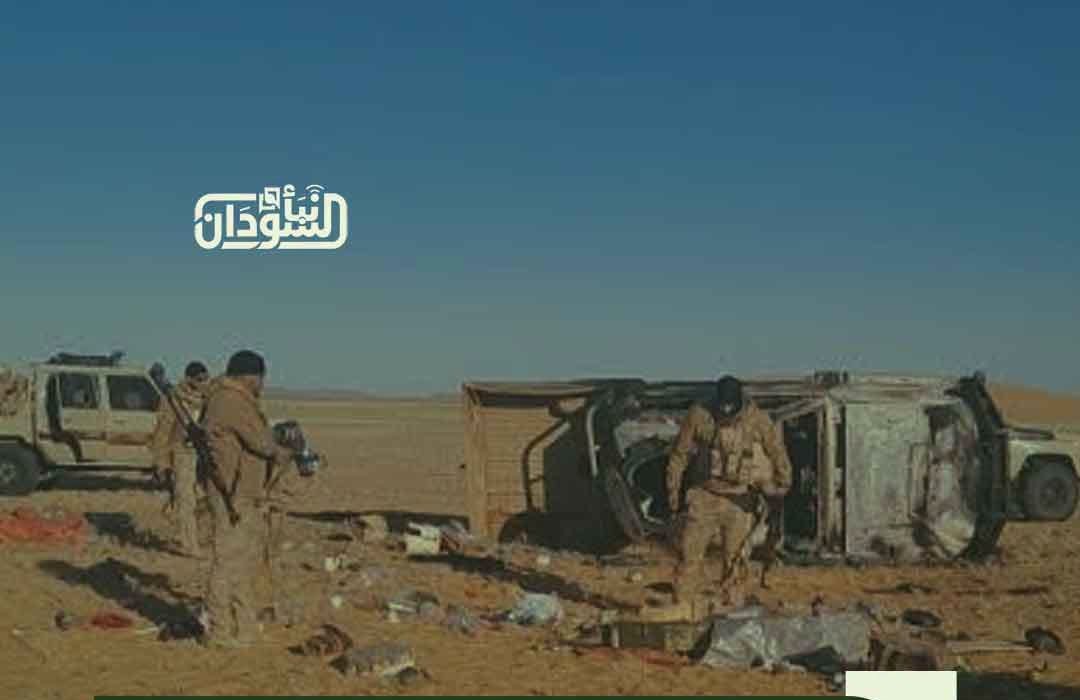
According to the investigative document, Sudanese military intelligence recovered a flight-control computer (autopilot) from the wreckage of a long-range attack drone shot down in the city of Al-Damazin on 20 September 2026.
An analysis of the computer’s memory revealed precise records indicating that the aircraft had taken off from coordinates (10.7220° N, 34.7662° E), a location near the area of Qizan, 1.7 kilometres inside Ethiopian sovereign territory. The data confirmed that the aircraft had travelled 10 kilometres through Ethiopian airspace along its programmed route before entering Sudanese airspace.
Strategic Drones and Serial Numbers
The report reveals the use of strategic Bayraktar Akıncı drones, one of which was shot down near El Obeid on 17 March 2026 and another near Al-Damazin on 23 May 2026.
Recovered flight paths established that the aircraft had taken off from Ethiopia’s Bahir Dar Air Base and travelled westwards before turning south through South Sudan in an attempt to evade Sudanese radar systems and air defences.
The report also presented wreckage fragments bearing manufacturer identification plates and serial numbers belonging to components produced by Baykar and Aselsan. It noted that Ethiopia had officially inducted this model into its military service and that it was sold exclusively to sovereign governments.
Camps and Guidance Stations with Regional Support
The report reinforces its findings with independent investigations, most notably a Reuters report and research by Yale University’s Humanitarian Research Lab. These investigations indicate that Ethiopian Defence Intelligence established a secret camp in the Mengi area to train 4,300 Rapid Support Forces (RSF) fighters, with funding and logistical support from the United Arab Emirates (UAE).
The report also documents intensive activity at Assosa Airport, including the establishment of ground-control stations for drones and the monitoring of military cargo aircraft, Ilyushin Il-76TD, believed to be linked to the UAE and involved in providing military support.
Deliberate Targeting of Civilians and Infrastructure
The report recorded 70 air attacks originating from Ethiopia between 15 February and 27 October 2026, with October accounting for the highest number, at 28 attacks.
The attacks resulted in 484 civilian deaths and injuries, in addition to 176 Sudanese Army personnel killed.
The report documented the Wad Al-Mahi massacre on 9 October, in which 30 people were killed, including 26 women and four children, as well as the killing of three children in Khartoum on 19 October.
Furthermore, strategic drones targeted six national electricity-generation stations on 26 and 27 October, taking them out of service and plunging the states of Khartoum, Al Gezira and Sennar into complete darkness.
Sudan’s Position and International Action
The report concludes with Sudan demanding that Ethiopia immediately shut down the launch facilities in Assosa, Bahir Dar and Al-Kormuk, and dismantle the Mengi camp. Sudan also intends to file a formal complaint with the United Nations Security Council and the African Union Peace and Security Council against Ethiopia and the countries involved, while stressing that it reserves its inherent sovereign right to self-defence under Article 51 of the United Nations Charter in response to these violations.
The report presents forensic and geospatial evidence of armed drone attacks launched against Sudan from Ethiopian territory. This includes components bearing serial numbers recovered from downed Bayraktar Akıncı aircraft operating from Bahir Dar Air Base, as well as flight instructions extracted from their autopilot systems.
These attacks are continuing, with at least two additional strikes having occurred since the report was prepared. They have resulted in significant civilian casualties and extensive damage to Sudan’s critical infrastructure, including water and electricity facilities and the national power grid.
#Sudan#Nabaa_Sudan#Nabaa