
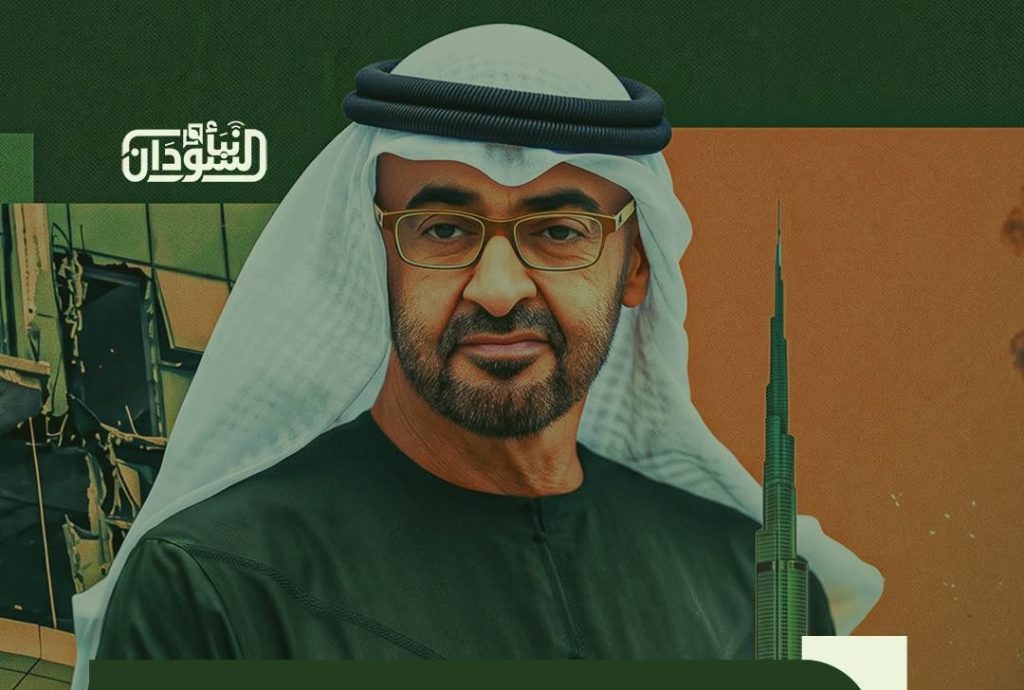
Berlin, September (SUNA) – Human Rights Watch (HRW) has called on German officials to confront the United Arab Emirates’ (UAE) human rights record and its role in regional conflicts, particularly the war in Sudan, during a forthcoming meeting between German Chancellor Friedrich Merz, German President Frank-Walter Steinmeier, and UAE President Mohammed bin Zayed Al Nahyan in Berlin on September 10.
The rights organization warned that German diplomatic silence and inaction over the UAE’s role in Sudan contribute to fueling atrocities and reinforcing impunity. It urged Berlin to raise these issues publicly and not allow economic and security interests to override serious human rights violations.
Philipp Fries, Germany Director at Human Rights Watch, said the German government’s lack of willingness to publicly address what he described as the UAE’s destructive role in Sudan was deeply concerning.
He added that Germany had led efforts to establish strong UN investigations into atrocities committed in Sudan and had hosted a major conference on the issue in Berlin earlier this year. He said Germany’s failure to address the role attributed by HRW to the UAE effectively gives a green light to future violations.
The rights group’s call comes after the UN Independent International Fact-Finding Mission for the Sudan, which Germany helped establish in 2023, published a report on September 1, 2026, addressing UAE-linked support networks that benefited the Rapid Support Forces (RSF).
The report concluded that the RSF was responsible for war crimes, crimes against humanity, and violations that UN investigators said showed “indications of genocide.”
UN investigators said individuals and entities operating from, registered in, or linked to the UAE had played a significant role in networks involved in recruiting, financing, transporting, and deploying foreign military contractors, as well as providing military-related support that benefited the RSF.
In another report published in May 2026, Human Rights Watch said Global Security Services Group, an Abu Dhabi-based security company, had since 2024 recruited hundreds of Colombian private military contractors who were deployed to Sudan to fight alongside the RSF.
The organization added that private military contractors were present in El Fasher, the capital of North Darfur, in October 2025, when the RSF took control of the city and, according to HRW, committed “widespread atrocities.”
Human Rights Watch called on Germany and other European Union countries to investigate the role of the company and its CEO, Mohammed Hamdan Al-Zaabi, with a view to imposing targeted sanctions on both.
The organization also urged EU member states to impose an EU-wide arms embargo on the UAE and publicly condemn its assistance to the RSF.
HRW also highlighted Abu Dhabi’s domestic record, saying it had documented over the years what it described as widespread repression of opposition, restrictions on freedom of expression and association, and serious abuses against migrant workers.
The organization said UAE authorities had targeted opposition figures, activists, and critics through prosecutions and lengthy prison sentences as part of an ongoing campaign to close civic space and prevent independent political or human rights opposition.
In 2025, UAE courts upheld, according to HRW, the convictions of 83 human rights defenders and dissidents in the country’s second-largest mass trial.
Among them was prominent human rights defender Ahmed Mansoor, who has remained detained since 2017 and is serving a lengthy prison sentence that HRW said was imposed in retaliation for his human rights activities and criticism of the UAE authorities.
Mohammed bin Zayed’s visit to Germany comes amid media reports that the two countries are preparing to announce a major investment partnership, alongside meetings with German arms manufacturers and an official banquet.
Human Rights Watch warned that Berlin’s efforts to strengthen economic and security ties with the UAE must not become a cover for silence over human rights violations or the role attributed to Abu Dhabi by UN and rights reports in armed conflicts.
Fries said the question German leaders should confront was how they could warmly receive Mohammed bin Zayed and strengthen security cooperation with the UAE while rights and UN reports accuse entities linked to the country of contributing to the escalation of atrocities in Sudan.
The German official at Human Rights Watch called on Berlin to declare its readiness to impose sanctions on UAE entities accused of transferring weapons and fighters to Sudan, and to demand the release of Ahmed Mansoor and other critics who, according to HRW, are being unjustly detained.
The organization stressed that international silence on these issues only reinforces impunity, emphasizing that commercial and investment interests should not substitute for accountability over the UAE’s human rights record and regional role.
#Sudan#Nabaa_Sudan#Nabaa