
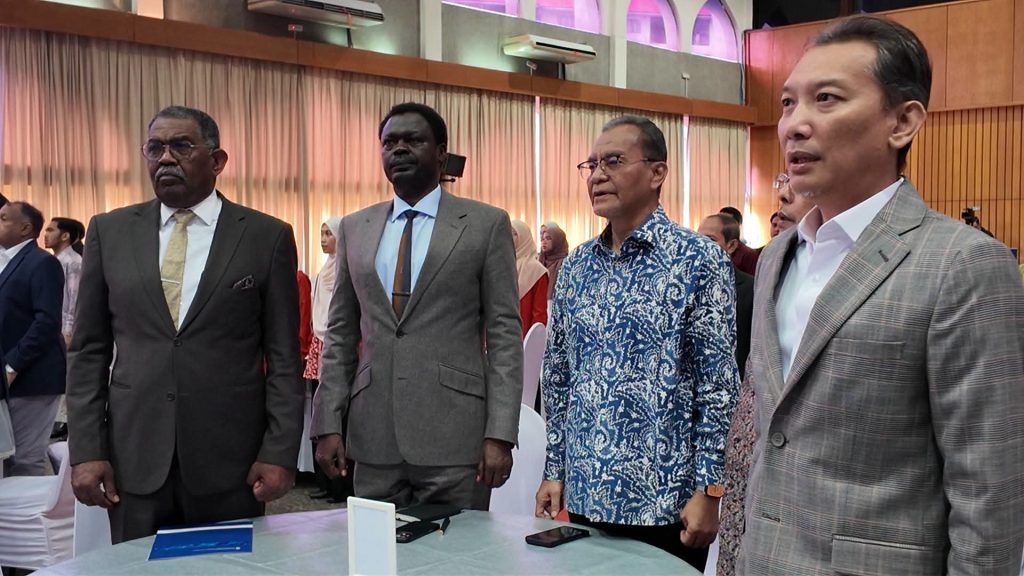
Kuala Lumpur (Nabaa Sudan) – The Malaysia-Sudan Conference on Education and Humanitarian Recovery concluded in the Malaysian capital, Kuala Lumpur, on Thursday under the theme “Rebuilding Hope in Darfur.” The conference brought together representatives of governments, diplomatic missions, universities, humanitarian organizations and donors. It was organized by the Embassy of Sudan in Malaysia in cooperation with the International Institute of Advanced Islamic Studies (IAIS).
The conference discussed ways to strengthen Sudanese-Malaysian cooperation and mobilize international support for humanitarian projects in education, health, early recovery and reconstruction amid the effects of the war in Darfur.
Governor of Darfur Region Mini Arko Minawi affirmed the Sudanese government’s commitment to working with partners and humanitarian organizations, removing obstacles and facilitating aid delivery to internally displaced persons (IDPs) and refugees to expand the humanitarian response. He expressed his gratitude to the Malaysian government and people, the international institute, participating organizations and the Sudanese community, commending the efforts of Sudan’s ambassador and embassy staff in organizing the conference.
Darfur Regional Finance Minister Dr. Abdelaziz Mursal Shiddo reviewed the state of education in the region, including the destruction of educational institutions and universities, the displacement of staff and the disruption of schooling. He noted that the experience of e-learning before the war provides a foundation for further development through the activation of educational platforms and the establishment of learning centres for affected students.
He explained that the region’s needs include establishing five health centres in each state, providing scholarships for bachelor’s, master’s and doctoral studies, and training personnel. He stressed the importance of cooperation with Malaysian universities.
Director-General of Social Welfare and Commissioner for Humanitarian Aid in the region, Engineer Abdel-Bagi Mohamed Hamid, presented a paper on humanitarian operations and the IDP conditions in Darfur and Kordofan, as well as refugees in Chad, South Sudan and Egypt. He called for a transition from emergency response to early recovery and sustainable development.
On e-learning, Dr. Abdel-Aati Omar presented the experience of sustaining education in Darfur through the Classera system, which was in use before the war. The system includes educational platforms, cloud hosting, digital books and online examinations. He said approximately 83,000 teachers and administrators had been trained, active users had reached 61,000, 8,000 schools had registered, and 112 electronic books had been made available.
The presentation outlined the challenges facing displaced and refugee students and proposed a plan to accommodate 2.79 million students inside Sudan and establish 106 community schools in seven countries hosting refugees through fixed and mobile centres. The plan comprises 10 projects with a total cost of US$937,000 and offers two student sponsorship options costing US$148 and US$48, respectively.
The presentation called on international partners and donors to contribute to funding educational projects, learning centres and student sponsorship programmes to help restore educational opportunities for children affected by the war.
On the sidelines of the conference, Ehsan Jismi Johar, head of the OPS organization, and the director of Malaysian national organizations affirmed their commitment to supporting humanitarian projects, building partnerships with the Humanitarian Aid Commission, and supporting mobile clinics and income-generating projects.
The conference concluded with a call to translate initiatives into practical, implementable projects and strengthen coordination among the regional government, universities, organizations and donors.
Strengthening Sudanese-Malaysian cooperation represents one of the avenues for mobilizing the resources and expertise needed to support humanitarian recovery in Darfur. Such efforts aim to help restore essential services and expand opportunities for children, students and affected communities to build a more stable future.
#Sudan #NabaaSudan #Nabaa