
The Ministry of Finance has launched new efforts to strengthen the national economy by regulating informal-sector activities and facilitating their transition into the formal economy, with the aim of improving economic management, enhancing data quality, and broadening the formal economic base.
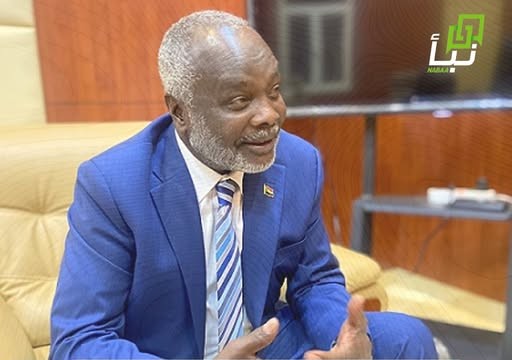
Addressing a workshop in Khartoum on Monday to validate the findings of a study on reducing informality and promoting formalisation through policies and incentives, Minister of Finance Dr. Gebreil Ibrahim announced new initiatives being implemented in partnership with the University of Khartoum. The initiatives are designed to refine policies and provide incentives for the gradual integration of informal activities into the formal economy, enabling authorities to accurately track money supply, measure gross domestic product (GDP), and formulate evidence-based economic policies.
The Minister said the government is taking concrete steps to bring more informal activities into the formal sector, underscoring the Ministry's commitment to digital transformation and the modernisation of the national statistical system. He noted that improving economic data would help regulate informal activities, expand the formal sector, ensure fairness in tax collection, broaden the tax base, and provide greater protection for informal-sector workers.
Acting Undersecretary of the Ministry of Finance Dr. Mohamed Ali Juma said the Ministry attaches considerable importance to the study and its recommendations in advancing economic reform and promoting financial inclusion.
For her part, Committee Chairperson Atiyat Abdo said the study seeks to establish a foundation for integrating the parallel economy into the formal sector and diversifying sources of national income and state revenue, in line with the Ministry's policy of strengthening oversight of public finances.
She described the informal sector as one of the Sudanese economy's most significant challenges because of its direct and indirect effects on macroeconomic performance, noting that its activities remain outside official statistics and regulatory frameworks while its workers lack adequate social protection.
She added that the Ministry, through the General Directorate for Planning, Policies and Studies and in coordination with the University of Khartoum's Consultancy Authority, prepared the study to support the transition of informal activities into the formal economy. The initiative originated in 2022 under the Committee for Creating an Enabling Environment for Small and Medium Enterprises (SMEs), which conducted field visits to ten states and surveyed 1,625 workers and 1,000 establishments, with Ministry staff serving as field researchers.
#Sudan-Nabaa#Sudan
Follow Nabaa Sudan channel on WhatsApp:
https://whatsapp.com/channel/0029VaG1qJ2FHWpuSTsncX43