
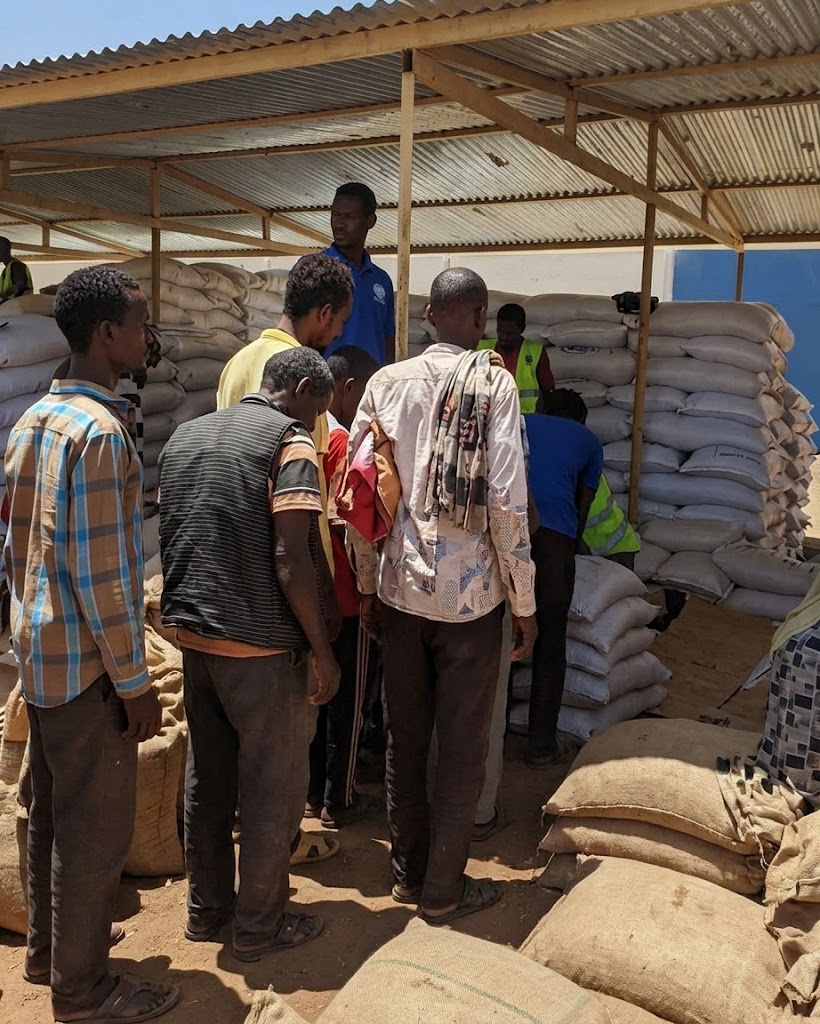
Nabaa Sudan – Food assistance operations in Sudan are facing mounting pressure due to funding shortages, amid a decline in the number of beneficiaries and a widening gap between humanitarian needs and available resources.
Carl Skau, Deputy Executive Director of the World Food Programme (WFP), revealed that food rations provided to beneficiaries in the Tawila area of North Darfur State are sufficient for only two weeks of each month, highlighting the scale of the shortfall facing relief operations.
According to the WFP’s October 2026 Country Brief, the number of people receiving food assistance in Sudan fell to approximately 3.1 million in September, compared with 4.1 million in August, representing a decline of one million beneficiaries in a single month.
The report explained that around 880,000 of those receiving assistance in September were living in areas classified as being at risk of famine, reflecting the continued threat of food insecurity in the areas hardest hit by the war.
The decline in beneficiary numbers raises questions about the factors behind the reduction in coverage, and whether funding shortages, field access difficulties or changes in the areas covered by operations have contributed to it.
Irregular aid deliveries or reductions in food rations pose an additional risk to households that depend on assistance to meet their basic needs, particularly displaced people, children, pregnant and breastfeeding women, and older people, amid the continuing humanitarian crisis and growing food needs.
#Sudan#Nabaa_Sudan#Nabaa