
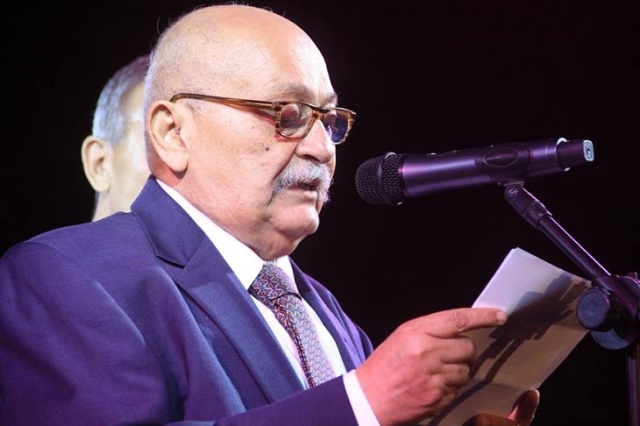
Legal expert Nabil Adib, a member of the Committee for Creating a Conducive Environment, Building Confidence and Holding Preliminary Consultations for the Sudanese-Sudanese Dialogue, said the current war represents “a symptom of the Sudanese crisis, not the crisis itself,” pointing out that a lasting end to the war requires addressing the root causes of the crisis through dialogue.
Speaking during a consultative meeting with media professionals, Adib explained that a ceasefire is a military matter over which civilians have no control, noting that the Jeddah Agreements included arrangements for halting the fighting for specified periods, but did not lead to an end to the war.
He said civilians cannot make the political process contingent on a decision to halt the fighting, given that the matter is fundamentally military, adding that the broader issue is to identify and address the causes of the Sudanese crisis.
Adib described the war as “political action carried out with different weapons,” saying that it carries political objectives. He stressed that the goal is not merely to end the current war, but to reach a solution that addresses the causes of wars in Sudan.
On the political front, he said discussion of Sudan’s future should not be confined to the form of government during the transitional period, but should instead focus on state-building and addressing the ongoing crisis.
He noted that transitional periods, by their nature, require special arrangements, pointing out that the presence of the army in power during previous transitional periods is not unfamiliar to Sudan’s history. However, he stressed that the dialogue proposed by the committee is not limited to the composition of the Transitional Sovereignty Council (TSC) or the position of the military institution.
Regarding armed movements, Adib noted that some movements have become part of the armed forces, while describing the Rapid Support Forces (RSF) as “a rebellious military force,” explaining that these developments raise questions about the position of armed forces and their relationship with the political process.
He affirmed that the proposed dialogue is a civilian political dialogue, and that addressing the Sudanese crisis cannot be separated from reaching a dialogue that tackles its roots, thereby paving the way for state-building and ending the cycle of recurring wars.
Sudan#Nabaa_Sudan#Nabaa