
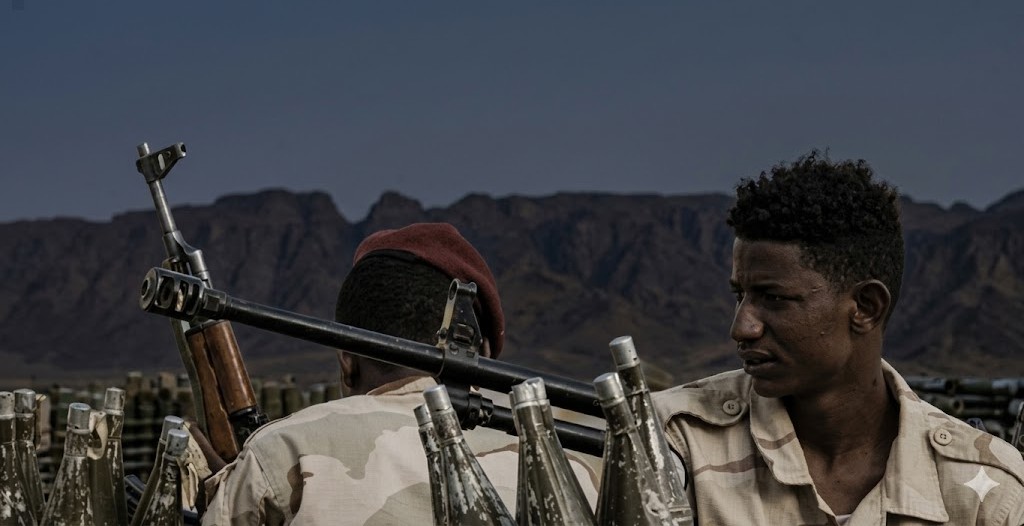
Sudan’s war is no longer merely a local or regional conflict; it has evolved into an open marketplace for private security companies and transcontinental mercenaries.
An extensive investigative report by Sudan Nabaa, drawing on documents, international corporate records, and data traced by Spain’s El País newspaper and human rights organizations, reveals the flow of fighters from Latin America—particularly Colombia and Al-Salvador—to join the ranks of the Rapid Support Forces (RSF) militia. These foreign operatives are involved in operating advanced weapons systems, including drones and heavy artillery, under the auspices of complex financial and logistical networks stretching from Abu Dhabi and Bogotá to Darfur, Libya, and Somalia.
The Digital Trap: From Vague Job Offers to Darfur’s Inferno
The story begins with obscure online recruitment advertisements. In September 2024, investigative sources tracked advertisements seeking drone pilots for work in Africa, offering attractive salaries ranging from US$2,500 to US$3,000 per month, including accommodation, transportation, and health insurance.
Behind this commercial façade, however, lay a military journey beginning in Bogotá and ending on Sudan’s battlefronts. Upon arriving in the United Arab Emirates (UAE), recruits signed a second contract with the Global Security Services Group—an Emirati company established in 2016 and linked to influential figures within the UAE Presidential Court—before being transferred to their final destination.
Secret Supply Routes: The Full Map
Investigations indicate that the dynamics of mercenary transfers shifted after the eastern Libya corridor became widely exposed in the media. The network now relies on two principal routes to transport Latin American fighters to Nyala, the capital of South Darfur and the RSF’s principal stronghold.
Route One: Bogotá → Paris → Dubai → Abu Dhabi, where recruits receive initial training at the Ghiyathi and Al-Wathba military bases.
Route Two (The African Corridor): Madrid → Addis Ababa, Ethiopia → Bossaso Base in Puntland, Somalia → Kufra, Libya → Nyala, Sudan, with a parallel support hub in N'Djamena, Chad.
Specialized Training Sites: Reports indicate that Bossaso has become a clandestine training centre where mercenaries receive advanced instruction in piloting and directing drones, while Libya’s Kufra base is reportedly used for additional field training.
“Desert Wolves” on the Battlefield: Drones, Artillery, and Recruitment of Minors
In the Sudanese battlefield, particularly in Darfur, these fighters have become known as the “Desert Wolves.” According to official complaints submitted by Sudan’s mission to the United Nations, the role of Latin American contractors has extended beyond advisory functions and includes:
1. Direct offensive operations: operating drones, heavy artillery, and armoured vehicles.
2. Military training: transferring combat experience to Rapid Support Forces (RSF) fighters, including the recruitment and training of minors.
3. Psychological warfare: coordinating and overseeing propaganda campaigns and media operations for the militia.
Alongside Colombian fighters, Salvadoran elements have also entered the conflict. Field sources reported that several Salvadoran fighters were killed during battles for control of Al-Fashir amid RSF offensive attempts to seize the city.
Alleged Humanitarian and Medical Cover
In an apparent effort to legitimize the presence of foreign personnel, sources tracked the involvement of certain contractors in projects to rehabilitate and equip three hospitals in areas under RSF control. Although aerial bombardments in Nyala disrupted these plans, health officials aligned with the militia acknowledged to international media outlets their openness to bringing in foreign experts under the pretext of service delivery and strategic planning—a rationale used as cover for the presence of foreign technicians and military personnel.
U.S. Sanctions Target “Fénix” Networks
In response to these activities, the U.S. Department of the Treasury imposed sanctions in December 2025 on four individuals and four entities involved in the transnational network, including the organization A4SI.
In mid-April 2026, Washington expanded the sanctions to include five additional entities and individuals, among them Fénix, an alternative front established by the network to circumvent sanctions and international financial oversight mechanisms and continue recruiting mercenaries.
Desperation as a Driver: TikTok as a Recruitment Platform
Despite the atrocities and systematic abuses attributed to the RSF in Darfur and Al-Fashir—which UN missions have described as amounting to indicators of genocide—social media platforms such as TikTok are replete with videos of former Colombian soldiers expressing their willingness to travel to Sudan.
The principal driver appears to be deteriorating economic conditions among retired military personnel in Latin America. One former soldier remarked, “After retirement, it is nearly impossible to find a good job,” while others wrote, “Ready to go anywhere,” underscoring how the hardship of former combatants in Colombia has become fuel for Sudan’s civil war, which has produced what is currently regarded as the world’s largest humanitarian crisis.
Conclusion
International media outlets contacted the press office of the Rapid Support Forces (RSF) for comment on the documented evidence, but the militia maintained its usual silence.
The battlefields of Darfur continue to demonstrate that the weapons killing Sudanese civilians are no longer solely local in origin; they are also being operated by mercenaries who travel thousands of miles across oceans in pursuit of blood- stained dollars.
#Sudan-Nabaa#Sudan
Follow Nabaa Sudan channel on WhatsApp:
https://whatsapp.com/channel/0029VaG1qJ2FHWpuSTsncX43