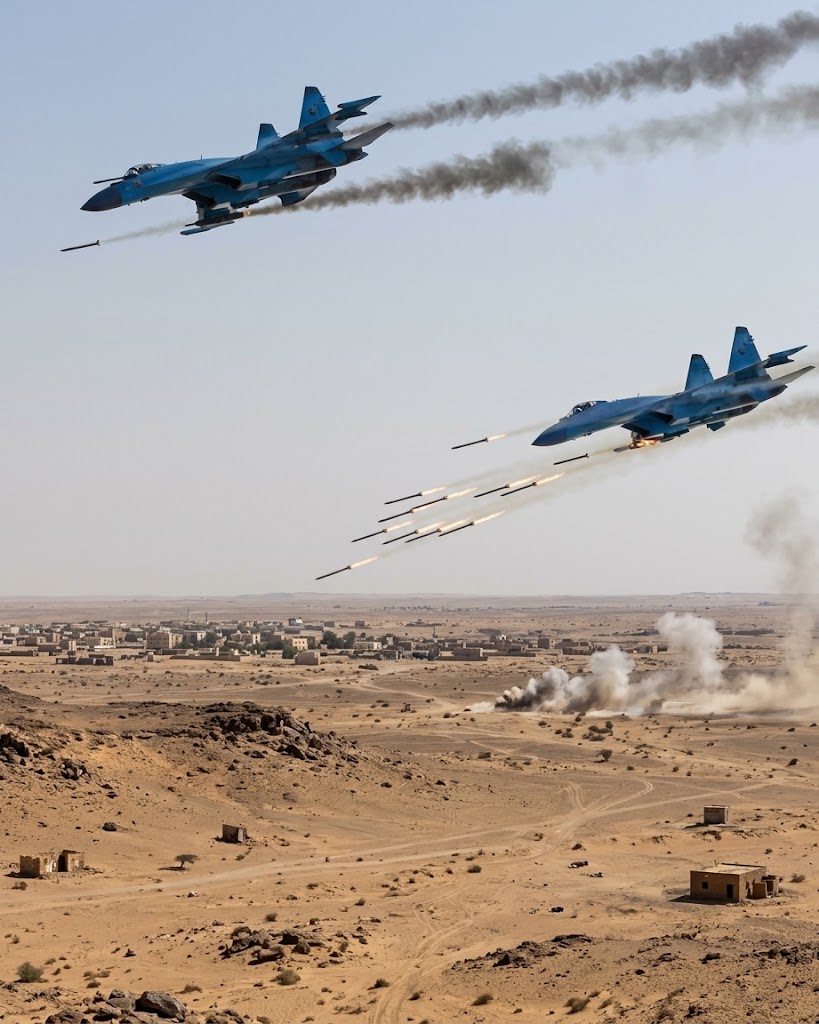

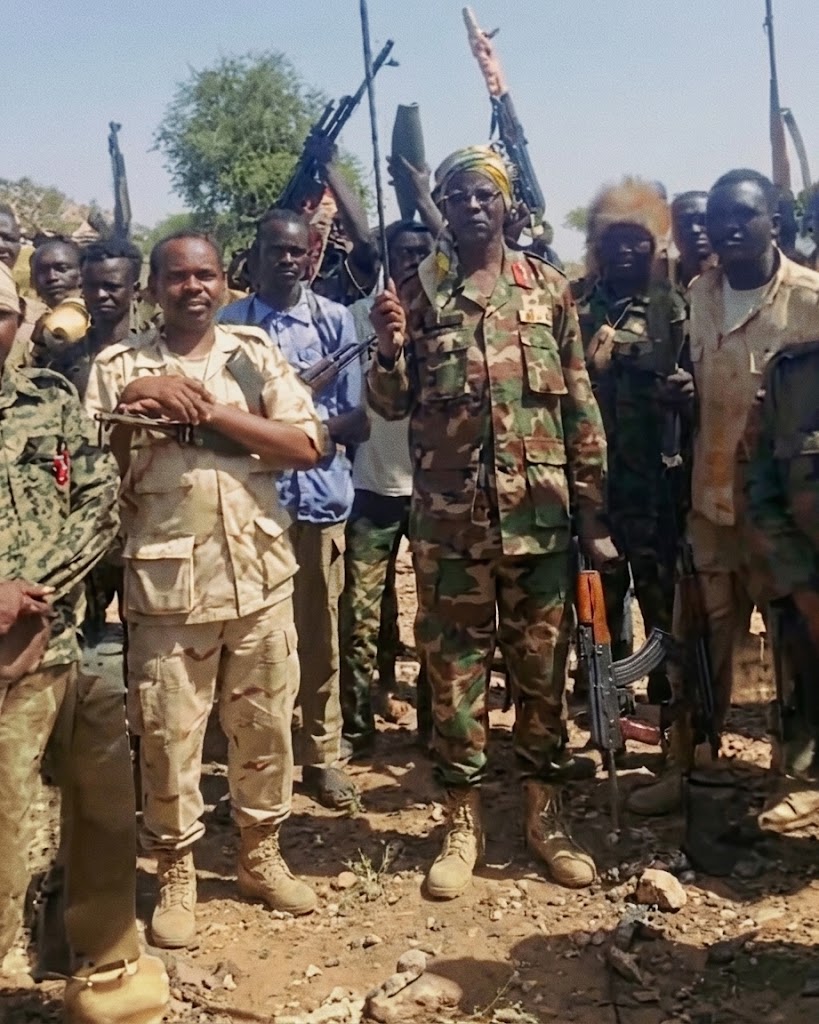



Following the Rapid Support Forces’ (RSF) attack on Musteriha in North Darfur over the past two days, targeting Sheikh Musa Hilal, leader of the Mahamid, in an apparent attempt to eliminate him and seize his land and territory, a new chapter in the long-standing dispute between Hilal and the RSF leadership has resurfaced. The conflict dates back to late 2005 and has withstood numerous reconciliation efforts within the Rizeigat tribe, as well as intermittent official attempts to contain it.
Before examining the roots of the hostility between Sheikh Musa Hilal and the militia leadership, it is important to note that Hilal assumed leadership of the Mahamid through traditional tribal succession. He inherited the position from his father, Sheikh Hilal Abdullah, who led the Mahamid for more than seventy years. Shortly before his death at the age of 111, the elder Hilal entrusted the leadership to Musa, although he was not his eldest son.
Musa Hilal emerged as a young and ambitious leader, independent in his views and often controversial among Darfur’s tribal administrations. His positions led to repeated clashes with regional authorities, resulting in his imprisonment on several occasions. A notable dispute with North Darfur State Wali (Governor) Ibrahim Suleiman in 2002 led to his detention in Port Sudan and Wad Madani. He was released following the outbreak of the Darfur rebellion and the attack on El Fasher Airport on April 25, 2003. After his release, he joined the popular mobilization campaign against the rebel movements and was later appointed head of the newly formed Border Guards forces.
At that time, Mohamed Hamdan Dagalo (Hemeidti) was largely unknown. One day after the April 2003 attack on El Fasher, the Wali (Governor) of South Darfur State and head of the State Security Committee, Lt. Gen. Adam Hamid Musa, along with Nyala Commissioner Adam Jamaa Adam, moved to form popular mobilization groups as a precaution against any potential security threats or expansion of rebel operations into South Darfur.
The first mobilization group in the state was formed under the leadership of retired Major Saleh Al-Zein, a member of the Beni Halba tribe, who was entrusted with organizing it. The group included Saeed Hussein Die Al-Noor, son of the Mahariya (Aolad Gaid) mayor (Omda) in the Nyala area; a man nicknamed “Zambaharat” from the Misseriya tribe in the Netiga area north of Nyala; and Mohamed Hamdan Dagalo of the Mahariya (Aolad Mansour) from the Um Al-Qura area east of Jebel Marra, north of Al-Malam.
Coordination of the group’s activities was carried out with Major Hireika Mohamed, from the Misseriya tribe, who was then commander of the Popular Defense Forces in the Nyala sector. Intelligence and operational oversight was supervised by Lt. Col. Mohamed Mahmoud of Military Intelligence at the headquarters of the 16th Infantry Division in Nyala.
Hemeidti was absorbed as an ordinary soldier, and neither he nor the other recruits who joined the mobilization were granted any military rank at the outset. During the early months, he worked on recruiting members of the Mahariya in the northern and southern Nyala areas, as well as from other branches of the Rizeigat tribe, including Al-Areigat, Al-Nawaiba, and Al-Mahamid.
He entered into a sharp dispute with Omda Abdullah Mustafa Abu Nuba, the well-known Mahariya tribal chief in areas surrounding Nyala, due to Hemeidti’s attempts to extend his authority beyond the powers of the native administration.
From May until December 2003, Mohamed Hamdan Dagalo did not hold any rank higher than that of an ordinary recruit. He was only later granted the rank of First Sergeant after demonstrating his ability to recruit additional fighters, including released detainees from Arab tribes who had previously been convicted in armed robbery cases.
Meanwhile, between April and June 2003, intensive contacts took place between the government and tribal leaders, which resulted in the release of Sheikh Musa Hilal from prison, where he had been held since late 2002. An agreement was reached assigning him leadership of the popular mobilization campaign across Darfur, and he was placed in charge of the newly established Border Guards forces.
The Director of Military Intelligence at the time, Lt. Gen. Awad Ibn Auf, headed this process, assisted in managing the file by then-Colonel Abdel Fattah Al-Burhan and other officers. Musa Hilal subsequently visited Nyala, where he met with the governor and state officials, and then traveled to Zalingei, El Geneina, and El Fasher.
The Border Guards were divided into regional groupings according to geographic areas, all reporting to Sheikh Musa Hilal. Each area was assigned a field commander (hakimdar), typically from the rank of sergeant, to lead it. Mohamed Hamdan Dagalo (Hemeidti) was assigned command of the unit operating around Nyala, extending from Al-Malam area northwest of Nyala to the areas of Jami‘ Abu ‘Ajura and Um Dawwan Ban south of the city. Other parts of South Darfur — particularly the homelands of the Beni Halba, Ta’aisha, Misseriya, Salamat, Tarjam, Falata, Rizeigat, and Ma’aliya tribes — were placed under different field commanders.
Tensions soon began to emerge between Musa Hilal and a number of the field commanders. The dispute was fueled in part by the way the file was administered through Military Intelligence, as well as by dissatisfaction among some commanders, incited by other parties. Points of contention centered on military vehicle registration numbers, the distribution of ranks, weapons allocations, and combat vehicles.
An anti-Hilal sentiment gradually spread within the ranks. Some commanders may have felt resentment or jealousy due to Hilal’s rising prominence, the spotlight cast on him by local and international media, and the privileges he was perceived to receive.
By the end of 2005, three field commanders had led organized opposition against Musa Hilal’s leadership: Al-Noor Al-Goba in North Darfur, Idris Hassan in West Darfur, and Mohamed Hamdan Dagalo in South Darfur. The dispute extended beyond Hilal to include army officers responsible for overseeing the Border Guards. The situation deteriorated further, culminating in the open rebellion of the three field commanders at the end of 2006.
Hemeidti seized weapons, artillery, and combat vehicles and fled outside Nyala. He first sought refuge with the leadership of the Rizeigat tribe in Al-Daein, but the late Nazir (Chieftain) Saeed Mahmoud Musa Madibo refused to allow him and his forces to remain there and asked him to leave. Hemeidti then moved through the eastern Jebel Marra area, southern Nyala, and the far south of Darfur. He later traveled to Chad seeking support, where he signed an agreement with the Justice and Equality Movement in the presence of the late President Idriss Déby.
Leaders of the Rizeigat tribe in Khartoum sought to contain the escalating crisis in the three Darfur states between the three Border Guards commanders and the state. Three delegations from tribal leaders in Khartoum traveled to meet Al-Nor Al-Goba, Mohamed Hamdan Dagalo, and Idris Hassan in their respective locations. They succeeded in persuading them to return to the fold of the state and the Sudanese Armed Forces.
A decision was subsequently taken to permanently separate the three commanders from Sheikh Musa Hilal and to reduce his powers. This measure led to the emergence of new centers of power within Darfur. The three commanders — foremost among them Hemeidti — aspired to parity with Musa Hilal, believing they would now enjoy the same opportunities, benefits, and standing. Grievances deepened, competition intensified, and divisions widened further.
These developments paved the way for a major turning point: the dissolution of the Border Guards forces two years later.
To be continued in the next episode…
#Sudan#Nabaa_Sudan#Nabaa
Follow Nabaa Sudan channel on WhatsApp:
https://whatsapp.com/channel/0029VaG1qJ2FHWpuSTsncX43
https://www.facebook.com/share/p/1DvWiGjnnu/