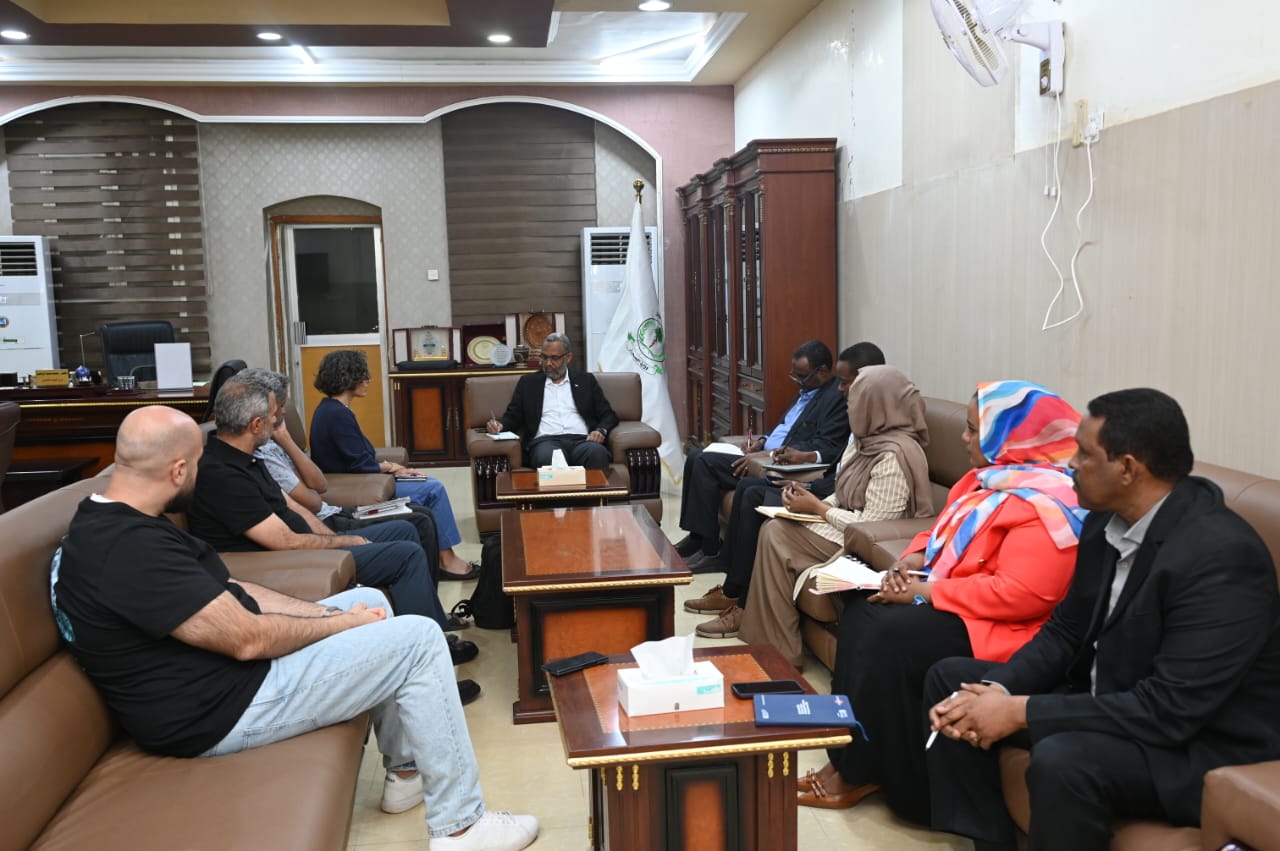








Undersecretary of the Ministry of Finance, Dr. Mohamed Ali Juma, said risk management has become an institutional necessity rather than an option given Sudan’s exceptional circumstances and the economic and financial challenges facing the country.
Speaking at a workshop in Khartoum on Monday, Juma said the Ministry of Finance attaches particular importance to risk management as part of a shift from responding to risks after they occur toward a proactive approach based on identifying, assessing, addressing, monitoring and reporting risks.
The workshop, organized by the Ministry of Finance’s Risk Management Unit, brought together risk-management focal points from government ministries, authorities, agencies and state-owned companies under the theme “Towards a Unified Institutional Framework for Financial and General Risk Management in the Government Sector.”
Juma highlighted the role of the Risk Management Unit as the central body responsible for coordinating and strengthening risk-management practices across government. He said establishing and activating risk-management focal points within government institutions and state-owned companies represents an important step toward ensuring that risk management becomes a practical component of planning, budgeting, decision-making and the implementation of programs and projects.
He explained that the role of focal points goes beyond transmitting information and official correspondence. They serve as a link between their respective institutions and the Ministry of Finance’s Risk Management Unit, helping to monitor risks, provide early warnings, supply the necessary information and follow up on mitigation measures, thereby enabling senior management to make more proactive decisions.
Juma stressed that risk management is not the responsibility of a single unit or directorate, but a collective responsibility extending across all levels of government.
He said this responsibility is particularly important under current circumstances, as risk management must become an integral part of economic recovery and reconstruction efforts, strengthen resilience, protect public resources, reduce losses and enhance confidence in state institutions.
The undersecretary commended the Risk Management Unit for its efforts to promote a culture of risk management across the government sector.
He expressed hope that the workshop would establish a clear and common understanding of roles, responsibilities, coordination and reporting mechanisms, while contributing to the development of a system better equipped to anticipate and respond to risks and strengthen the efficiency and resilience of state institutions.
Nabaa_Sudan#Sudan