
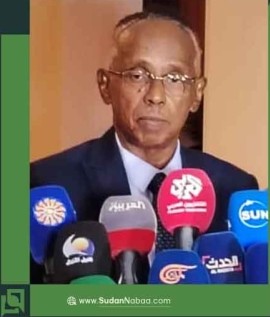
The official spokesman for the Sudanese-Sudanese Dialogue Preparatory Committee, Othman Mirghani, said the committee had made significant progress in consultations with political and societal forces, noting that recent meetings with political parties and alliances demonstrated broad support for the dialogue and a strong desire to ensure its success.
Mirghani said the committee had met with a number of political parties and alliances to discuss its vision for the Sudanese-Sudanese dialogue, as well as proposals that could help formulate an integrated vision. He stressed that the overall positions expressed during the meetings were positive.
He explained that a number of political forces had affirmed their support for the dialogue, noting that some had previously proposed the idea of a Sudanese-Sudanese dialogue, which he considered a factor that would assist the committee in carrying out its mission.
The official spokesman for the Dialogue Preparatory Committee noted that the discussions included questions about expanding participation to encompass Sudanese communities at the grassroots level across different parts of the country. He said the committee had already begun reaching out to more than 100 community groups over the past week, while contacts with other groups and stakeholders were continuing.
Mirghani stressed that the committee had no mandate to intervene in the dialogue itself, explaining that its role was limited to preparations and did not include setting the dialogue’s agenda, determining its participants, or deciding on the recommendations and resolutions that might emerge from it.
He added that the objective was to complete the preparatory process as quickly as possible, paving the way for the transition to the actual dialogue phase, during which political and societal forces would be responsible for reaching agreement on the body that would manage the dialogue, its participants, and its agenda.
Committee Independence
Asked about the impact of statements by the army leadership regarding the form of political authority and the democratic process on the committee’s work, Mirghani said such statements did not constrain its activities because they were issued by parties that were neither members of the committee nor covered by its mandate.
He affirmed that the committee operates in accordance with its own terms of reference and mandate, free from any government or political influence. He said the nature of its work and its independence demonstrated its ability to prepare for the dialogue without being affected by the positions of the various parties.
Consultations Without Exclusion
Regarding the political forces included in the consultations, Mirghani said the committee was engaging with political parties individually, as well as with political alliances and blocs, in addition to independent figures whose views could contribute to the societal dialogue.
He stressed that the scope of the consultations remained open to various political forces, including those that had not yet been invited, emphasizing that the committee’s approach was based on the principle of “no exclusion and no exception.”
He explained that inclusiveness at this stage applied to the preparatory and consultative process, while determining the participants in the dialogue and its agenda would remain the responsibility of political and societal forces once the process moved to the next phase.
Government to Provide Funding
The official spokesman for the Dialogue Preparatory Committee denied that there was any external funding for the dialogue, affirming that, from the outset of the initiative, the committee had stipulated that the Sudanese government would provide the financial and logistical requirements from public funds.
He said the government had agreed to this arrangement and pledged to provide the necessary resources, meaning there was no need for financial or logistical support from any external party.
Dialogue to Go Beyond Political Settlement
Asked about safeguards to prevent the dialogue from turning into merely a political settlement among elites or armed groups, Mirghani said the fundamental bet was on the will of Sudanese political and societal forces and their desire to address the roots of the crisis and open a new chapter in the country’s history.
He affirmed that the Preparatory Committee would not interfere in the outcome of the dialogue, as its mandate would end as soon as the dialogue began. He expressed confidence in the ability of Sudanese people to produce a dialogue that reflects the aspirations of the Sudanese people.
The official spokesman for the Dialogue Preparatory Committee described the committee’s meeting with political forces as “very constructive,” expecting it to lead to further meetings. He said maintaining this level of cooperation could accelerate the completion of the preparatory phase and pave the way for an authentic Sudanese-Sudanese dialogue in which political and societal forces would participate with their diverse views and differences.
#Sudan#Nabaa_Sudan#Nabaa#